
Introduction: Survival Was Never a Solo Job
Imagine waking up before sunrise to the sound of wind pushing through open land. No nearby town. No doctor to call and no store to run to for food or medicine.
Now imagine your mother is burning with fever… and you are the only one there.
What do you do?
For pioneer families, this was not rare. It was part of life.
Every day carries risk. Illness could strike without warning. A broken tool could stop work. A missed harvest could mean hunger. And in moments like these, one truth became clear very quickly:
No one survived alone.
This is exactly why pioneer communities relied on neighbor cooperation. It wasn’t just a tradition—it was a necessity. When someone cried for help, people did not hesitate. They came with food, hands, skills, and care. They showed up tired, busy, and sometimes afraid, but they showed up anyway.
Because out there, survival was shared.
And more than survival, something deeper grew.
Trust.
Connection.
A sense that even in the hardest moments, you were not forgotten.
That is what made pioneer communities strong.

ELOISE OF WESTHAVEN
Volume 1

ELOISE OF WESTHAVEN
Volume 2
The Harsh Reality of Pioneer Life
Pioneer communities lived in environments that tested both strength and spirit.
Limited Resources
There were no nearby doctors, no steady supply of goods, and very few tools. Families had to rely on what they could grow, build, or trade.
Physical Demands
Daily life required hard labor. Farming, building, hauling water, and preparing food all took time and energy. Even basic survival tasks could take all day.
Constant Risk
Illness could spread fast. Injuries could become deadly. A bad season could wipe out crops and leave families hungry.
A single setback could change everything.
When One Family Struggled, Everyone Felt It
Pioneer communities were small and tightly connected.
If one family failed:
- Fields might go unworked
- Food supply could shrink
- Trade between neighbors could slow down
This created a ripple effect.
Helping a neighbor was not just an act of kindness. It protected the whole community.
A Clear Example of Cooperation in Action
When the crisis hit, people did not wait.
In one case, a young girl rushed into town asking for help because her mother was very sick. Neighbors responded right away. They gathered supplies, prepared transport, and came together to care for the family.
They brought food, cleaned the home, and stayed through the emergency, and they worked as a team without being asked twice.
This shows something simple but powerful:
People helped because they knew one day they might need help too.
5 Core Reasons Pioneer Communities Relied on Cooperation
1. Survival Required Shared Labor
Farming alone was too much for one family.
Neighbors helped with:
- Planting and harvesting
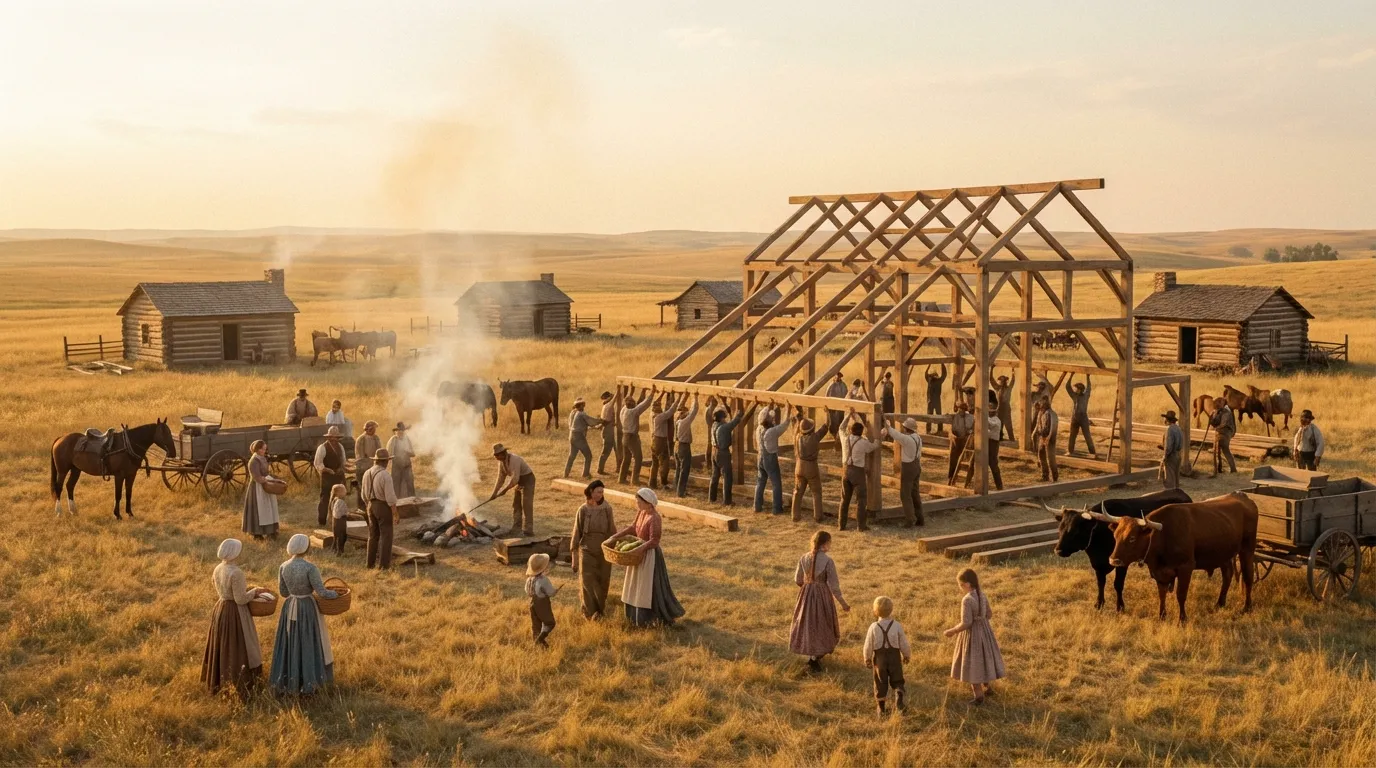
- Building barns and homes
- Repairing tools and structures
Group work saved time and reduced exhaustion. It made hard jobs possible.
2. Medical Care Was a Shared Responsibility
Doctors were not always available.
Communities relied on:
- Basic health knowledge
- Herbal remedies
- Hands-on care
Neighbors stepped in to:
- Watch over the sick
- Prepare meals
- Clean and maintain living spaces
Care was something everyone took part in.
3. Emotional Support Helped People Stay Strong
Life on the frontier came with loss.
Families often faced:
- Death of loved ones
- Sudden illness
- Hard living conditions
During these times, neighbors stayed close. They comforted, helped with decisions, and made sure no one faced grief alone.
This kind of support gave people the strength to keep going.
4. Sharing Resources Reduced Risk
Pioneers shared what they had.
This included:
- Food
- Seeds
- Tools
- Livestock
If one family ran low, others helped fill the gap.
This created a safety net that made survival more stable.
5. Cooperation Built Trust and Stability
Over time, helping each other has built strong trust.
People knew:
- Help would come when needed
- Their effort would be returned
This trust made daily life less stressful and more secure.
Asking for Help Requires Its Own Kind of Bravery
While helping a neighbor was celebrated, needing help was often painful. Pioneer culture placed a high value on self-reliance and stoicism. Admitting that a situation was beyond one’s control was not easy; it often felt like a failure of duty.
This added a complex layer to neighbor cooperation:
- Swallowing Pride: A farmer struggling with a failed crop had to overcome shame before asking for food.
- The Fear of Debt: Families often worried about being a burden. They feared they might not be able to return the favor when the time came.
- The Dignity of Giving: To protect the pride of those in need, neighbors often framed their help as “trade” or “just passing through” rather than charity.
This dynamic made cooperation more than a simple transaction. It required vulnerability. The strongest community bonds were often formed not just by the giving of help, but by the courage it took to receive it with grace.
The Human Side of Cooperation
Cooperation was not just about survival. It was about connection.
People Needed Each Other
Living alone in a harsh environment could break a person down.
Helping others created:
- A sense of purpose
- Strong relationships
- Emotional strength
Shared Hardship Built Strong Bonds
When people worked through challenges together, they formed deep connections.
Neighbors often became like family.
The Role of Awareness and Care
People who helped others noticed what was happening around them.
They paid attention.
They saw when someone needed help and acted quickly.
This shows a simple pattern:
- Notice the need
- Feel concern
- Take action
Those who stayed aware became key members of the community.
Why Cooperation Was Stronger Than Independence
Today, independence is often praised.
But pioneer life showed something different.
Trying to do everything alone led to:
- Burnout
- Mistakes
- Greater risk
Working together allowed people to:
- Share the load
- Solve problems faster
- Stay healthier and safer
True strength came from unity, not isolation.
What Modern Life Can Learn from Pioneer Communities
The same lessons still matter today.
Strong Communities Create Stability
People who support each other build safer and stronger environments.
Helping Others Builds Personal Strength
Giving support can increase confidence and purpose.
Shared Effort Leads to Better Results
Working together often leads to faster and better outcomes.
Emotional Support Still Matters
Sometimes, listening and being present are enough to help someone move forward.
Simple Ways to Apply These Lessons Today
You do not need to live on a frontier to practice cooperation.
- Check in on neighbors
- Offer help when you notice a need
- Share skills or knowledge
- Build small support groups
Small actions can make a big difference.
Facts About Cooperation
- Communities that work together have higher survival rates during a crisis
- Social support reduces stress and improves mental health
- Shared labor systems increase efficiency and reduce risk
These patterns have been observed across history and still apply today.
FAQs
1. Why did pioneer communities rely on neighbor cooperation?
Because survival required shared labor, resources, and support. No single family could manage everything alone.
2. What types of help did neighbors provide?
They helped with farming, building, medical care, food sharing, and emotional support.
3. What happened without cooperation?
Families faced a higher risk of illness, food shortage, and even death due to a lack of support.
4. Was cooperation common in all pioneer communities?
Yes, most communities depended on it, though the level of support could vary.
5. What is the biggest lesson from pioneer cooperation?
That working together makes people stronger, safer, and more resilient.
Conclusion: The Strength of Community
Pioneer communities survived because they understood one thing clearly:
Life is easier when people help each other.
They shared work.
They shared resources.
And, they shared responsibility.
And in doing so, they built communities strong enough to endure hardship.
Call to Action
Take a moment to think about your own environment.
Is there someone who might need support today?
Start small. Reach out. Offer help.
Then share this article with others who value strong communities.
If stories like this resonate, it can help to see how these themes play out through real characters and lived experiences. The journey found in Eloise reflects many of the same struggles, choices, and quiet strength seen in pioneer life. You can also explore more about the author and the kind of stories that focus on resilience and human connection.

0 Comments