
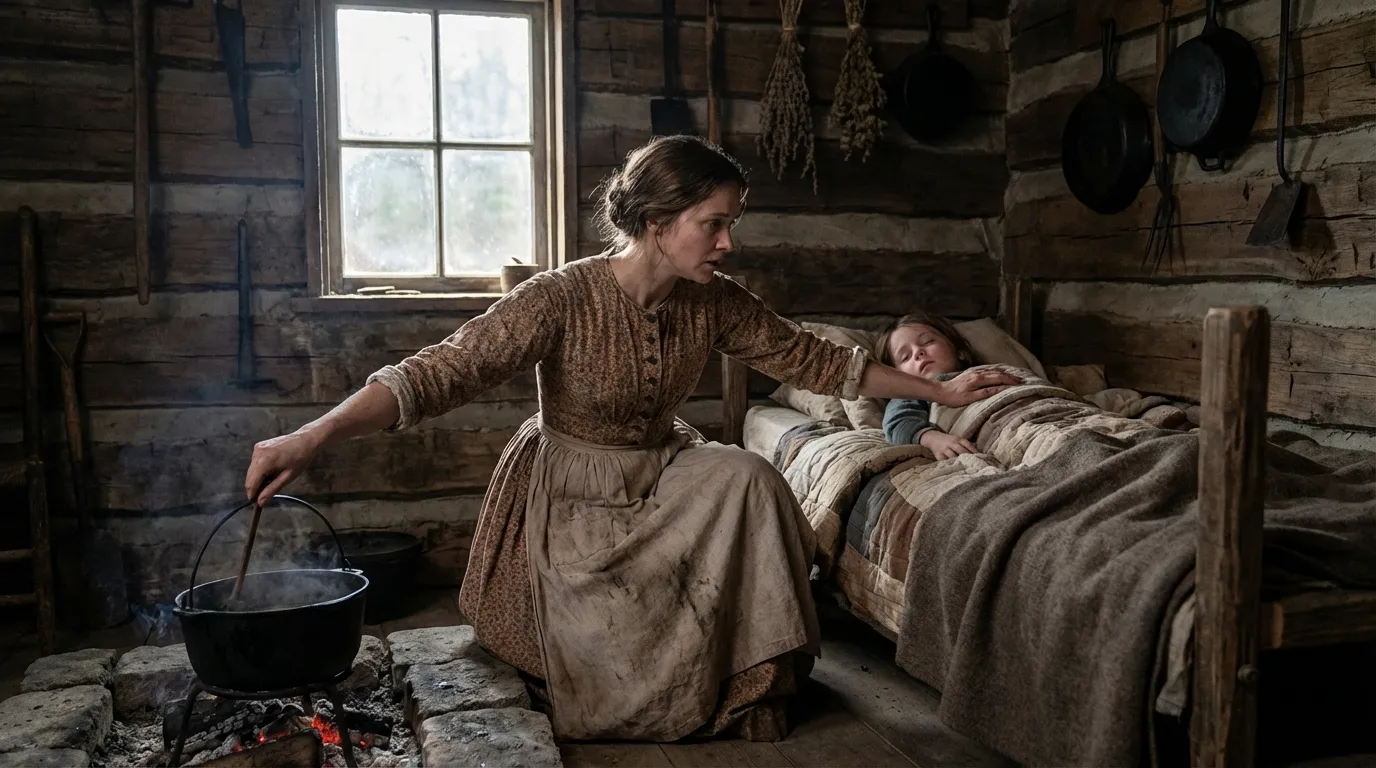
Historical novels about frontier life do not stay alive in readers’ minds because of wagons, dust, or old cabins alone. They stay alive because they show what hardship does to a human being.
A good frontier novel makes the struggle feel close. It lets readers feel the dry throat after a long run for help. It lets them feel the ache of boots that no longer fit, the fear of sickness in a one-room home, the silence after a burial, and the strange fact that chores still need doing while a heart is breaking.
That is why this topic still matters. Rural frontier stories are about more than old-time survival. They are about what happens when life gets stripped down to its basics: food, weather, illness, work, family, loss, faith, and the need for other people.

ELOISE OF WESTHAVEN
Volume 1

ELOISE OF WESTHAVEN
Volume 2
Frontier hardship is usually shown through daily life, not speeches
The strongest historical novels do not explain hardship like a history lecture. They show it through daily acts.
Small tasks carry big weight
A frontier story often builds pressure through plain tasks:
- fetching water
- feeding animals
- cleaning
- cooking with little food
- caring for sick family members
- mending clothes
- burying the dead
- keeping going anyway
This matters because real hardship is often boring before it becomes dramatic. Readers do not just see one big disaster. They see a pile of little demands that never stop.
That is one reason frontier fiction feels real. It shows that suffering is often repetitive. A person can be scared, hungry, tired, and still need to sweep the floor.
Rural frontier novels often replace comfort with exposure
Modern life hides many risks. Frontier fiction removes that cover.
Nature is not just pretty. It pushes back.
Top frontier literature discussions often frame the frontier as a place tied to survival, danger, self-reliance, and moral testing. But the best novels go further. They show that land can be beautiful and cruel at the same time.
In these books, people are exposed to:
- harsh winters
- drought
- crop failure
- sickness
- animal threats
- distance from doctors or stores
- weak housing
- isolation
This exposure gives frontier fiction its pressure. A broken hinge, a poor harvest, or one fever can become a life-changing event.
The historical reality behind these stories supports that tone. The U.S. Census Bureau later described the frontier as no longer having a clear line by 1890, which shows how central frontier settlement had become to American life and imagination. That larger history helps explain why frontier hardship became such a lasting literary subject.
Silence and distance act as their own kind of enemy
While physical labor breaks the body, the landscape often works on the mind. Many frontier novels portray the environment not just as a backdrop, but as a source of psychological pressure.
The sheer size of the land can make a person feel small. In the best books, distance is not just a measurement; it is a wall. A neighbor might live ten miles away, which means a cry for help cannot be heard.
This creates a unique tension:
- The weight of quiet: When the wind stops, the silence can feel heavy.
- The fear of the horizon: Endless sky or prairie can feel like a cage without bars.
- The strain on the mind: Without the noise of a city or the buffer of a crowd, characters are left alone with their thoughts. Anxiety echoes louder in a quiet cabin.
Good historical fiction shows that “cabin fever” was real long before it had a name. It shows characters fighting to keep their sanity as the only sounds are the fire crackling or the wind against the door. This mental hardship is just as dangerous as a blizzard or a wolf.
Illness is one of the clearest ways novels portray hardship
Many frontier novels use illness to reveal how fragile rural life was.
Sickness exposes every weakness in a household
When one person gets sick, everything shakes:
- labor stops
- food runs low
- care work rises
- fear spreads
- money disappears
- children grow up fast
This is where historical fiction becomes deeply worth reading. A character is not just fighting disease. They are fighting helplessness.
Good novels show how illness changes a house. The room smells different. Voices get quieter. Time stretches. People pray, guess, wait, and hope. Then they still must cook, carry, clean, and think ahead.
That kind of writing shows a deeper truth: frontier hardship was often medical, emotional, and domestic at the same time.
Loss in frontier fiction is rarely neat
A lot of articles talk about “bravery” in frontier stories. That is true, but bravery is only half the picture.
Grief usually arrives in the middle of unfinished work
Historical novels often portray loss in a way that feels painfully real. Someone dies, and the world does not pause. Animals still need water. Bread still needs to be baked. A body must be buried. A younger sibling still asks questions. A farm still stands there, waiting for labor from people who are already worn out.
This is one of the deepest strengths of frontier fiction. It does not always show grief as a dramatic scene with perfect words. It often shows grief as confusion, numbness, anger, and duty.
And that is honest.
Frontier women are often shown through their capabilities under pressure
Many reading lists praise “strong female characters” in frontier fiction. That phrase is true, but it can also be lazy.
Strength is shown in skill, endurance, and judgment
In the best rural frontier novels, women and girls are not strong because they sound bold in one big scene. They are strong because they:
- keep a house running with little
- care for the sick
- read danger early
- manage fear
- do field and home labor
- solve problems without praise
- absorb grief and still act
Some novels also show an important truth: frontier life often blurred neat lines between “men’s work” and “women’s work.” When survival is the goal, usefulness matters more than labels.
That kind of portrayal makes the characters feel lived in. It also helps readers see that maturity on the frontier was often forced early.
Community is the hidden engine of many frontier stories
Self-reliance is real, but nobody survives alone
Yes, frontier stories often value independence. EBSCO notes that the literature of the West and the frontier is tied to ideas like self-reliance and individualism. But strong historical novels also show the limits of that ideal.
People need neighbors.
They need someone who will bring food, share tools, help with a burial, watch a sick child, or show up with clean cloths and practical sense. That kind of help is not sentimental fluff. It is survival.
This is also true in frontier history. One-room schools, churches, and town networks often served as gathering points for families spread far apart. The National Park Service notes that such places helped families build community across distance.
In fiction, that same truth often appears in smaller ways: a ride into town, a borrowed wagon, a woman who knows herbs, a neighbor who does not ask too many questions before helping.
The best novels show hardship changing the mind, not just the body
Hardship in rural frontier fiction often creates an inner shift.
Characters move through levels of awareness
At first, a character may simply react. They panic, cry, run, hide, or deny what is happening.
Then something changes. They begin to notice cause and effect. Soon, what must be done first becomes clear. People around them are read more carefully. Instead of waiting for rescue, they take action. Over time, they understand what matters most.
That growth is one of the great gifts of frontier fiction. It shows that survival is not just about muscle. It is awareness.
A person may start as sheltered, frightened, or dependent. Hardship then teaches:
- attention
- emotional control
- practical thinking
- compassion
- humility
- courage with fear still present
That is why these novels often feel rich and lasting. The outer frontier becomes an inner one too.
Frontier myths and frontier truth are not the same
Some stories still present the frontier as a grand symbol of adventure. Others take a harder look and reveal the brutality, especially toward Indigenous people.
The strongest historical novels do not polish hardship into legend
They resist easy myths by showing:
- hunger instead of romance
- mess instead of glory
- unequal power instead of simple heroism
- moral conflict instead of a clean triumph
This matters. Readers today are often less interested in fantasy courage and more interested in honest human struggle. A better frontier novel does not ask readers to worship the past. It asks them to face it.
Why these portrayals still matter now
Most readers are not worried about wolves outside the cabin or a missing wagon wheel. But they do know strain.
They know burnout. Many carry the weight of family duty. Grief can arrive in the middle of a workday without warning. At times, life demands strength before they feel ready.
That is why rural frontier hardship still exists. These novels remind us that resilience is rarely loud. It often looks like the next needed act, done with shaking hands.
Final thoughts
How historical novels portray rural frontier hardships comes down to one thing: they make survival personal.
They do not just show what the frontier looked like. Instead, these stories reveal what it costs. Dust, distance, illness, hunger, labor, burial, and recovery all come into focus. Through these struggles, people grow more aware, more capable, and at times more tender through pain.
And when the writing is good, readers walk away with more than a history lesson. They walk away with respect for ordinary endurance.
FAQs
1. What hardships do frontier novels usually show?
They often show illness, hunger, weather, isolation, hard labor, grief, weak housing, and the lack of medical help.
2. Why do daily chores matter so much in frontier fiction?
Because chores show how survival worked. They make hardship feel real, steady, and personal.
3. Do frontier novels only focus on action and danger?
No. The best ones also focus on care work, recovery, family strain, and emotional growth.
4. How are women often portrayed in rural frontier novels?
They are often shown as practical, steady, skilled, and emotionally strong under pressure.
5. Why do these books still connect with readers today?
Because the core themes are still familiar: loss, duty, fear, endurance, and the need for community.
CTA
If this topic stayed with you, save this article and share it with another reader who loves historical fiction. Then leave a comment: Which frontier novel showed hardship in the most human way for you?

0 Comments